My parents live in a small house in the Midwest. The kind of winter where the wind comes off the plains and finds every crack in the siding, every gap around the windows, every place it can seep in.
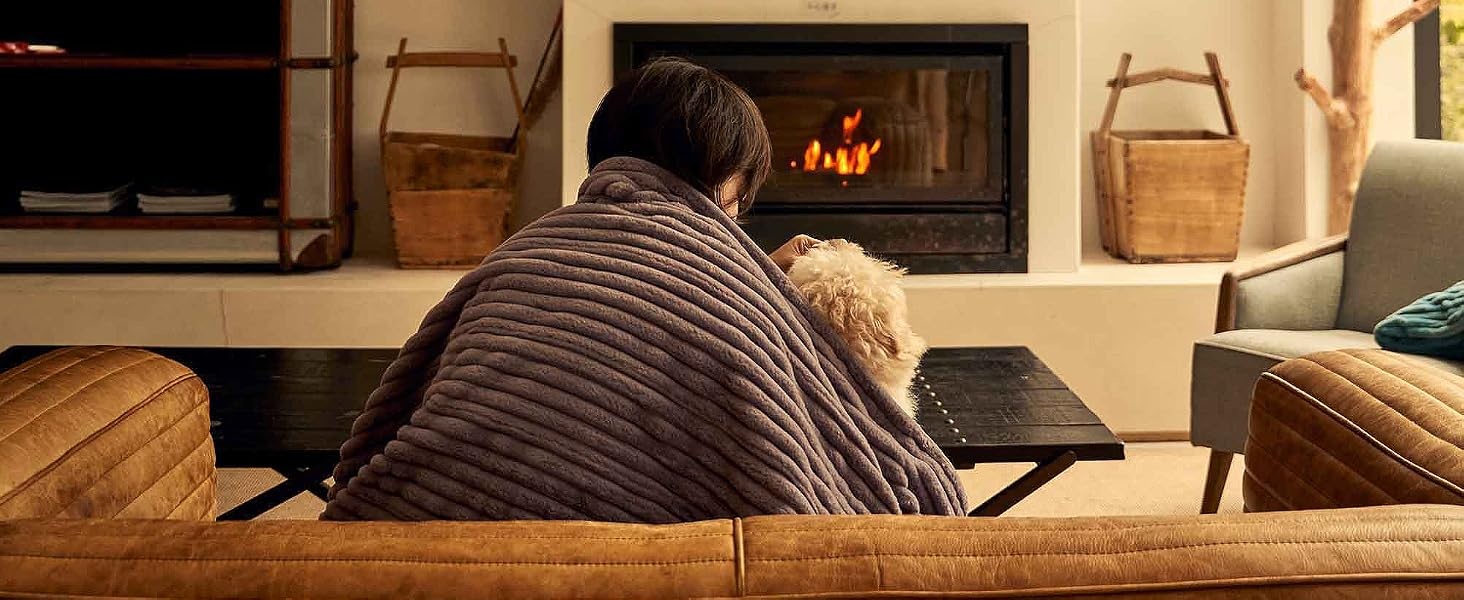
The house has a furnace, of course. But my dad keeps the thermostat at 64 degrees and wears a cardigan indoors from November to March. My mom piles blankets on the couch — a crocheted one, a wool one, a fleece one from a hotel they stayed at in 2007 — and tucks a heated throw over her legs while she watches TV in the evenings.
I live on the West Coast now, in a city where winter is more rain than snow. My apartment stays mild enough that I barely even think about heating. But every time I go home for Christmas, I'm shocked all over again by how cold it is. By the chill that settles into the tile floor of the kitchen, by the way my mom's hands are always cold when she hugs me hello.
I wanted to buy them something useful
I'd been thinking about getting them an electric blanket for years, but I kept putting it off. Partly because I knew what my mom would say: "Honey, we don't need that. Save your money." Partly because I wasn't sure which kind to get, and I worried about picking the wrong one.
Then, last November, my mom mentioned on the phone that her shoulders had been hurting her — arthritis, she said, acts up when it's cold. Just a passing complaint, the kind of thing she'd brush off if you asked her about it directly. But it got under my skin.
After we hung up, I opened my laptop and started shopping.
I chose carefully. I wanted something with a simple controller — big buttons, a clear dial, not a lot of features that would confuse them. No Bluetooth, no app, nothing you needed a manual to understand. Just: turn it on, pick a heat level, set the timer. That's it.
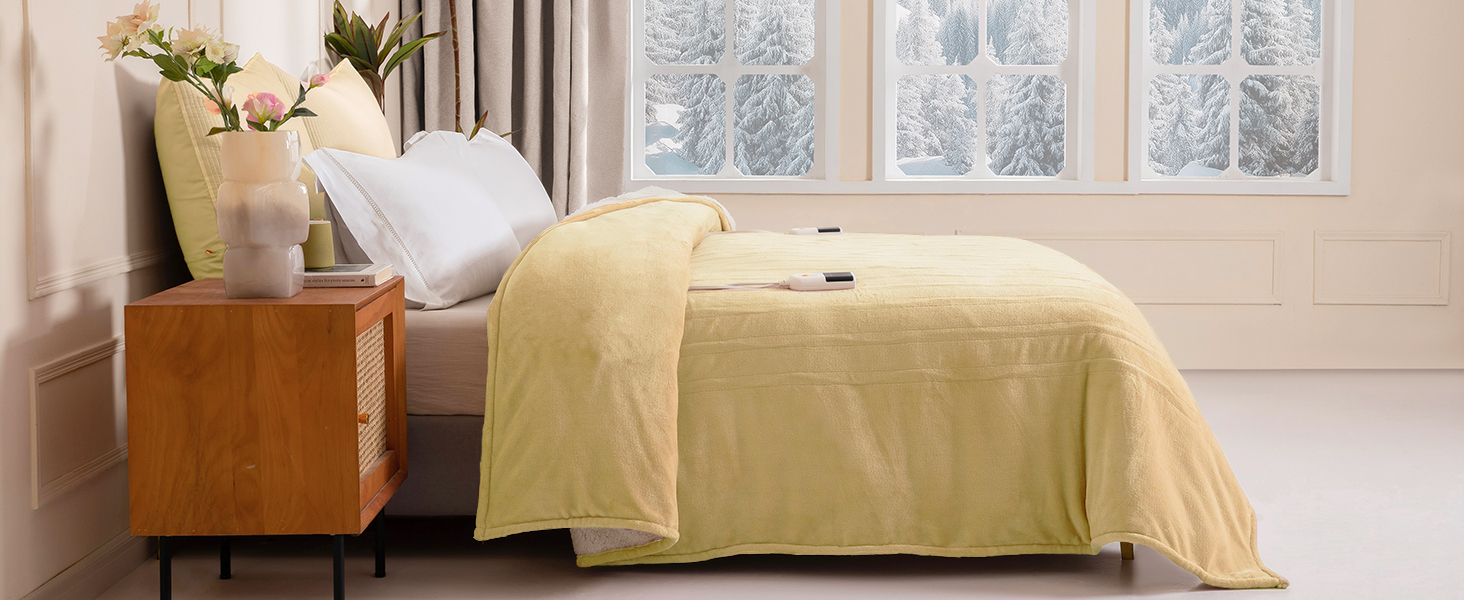
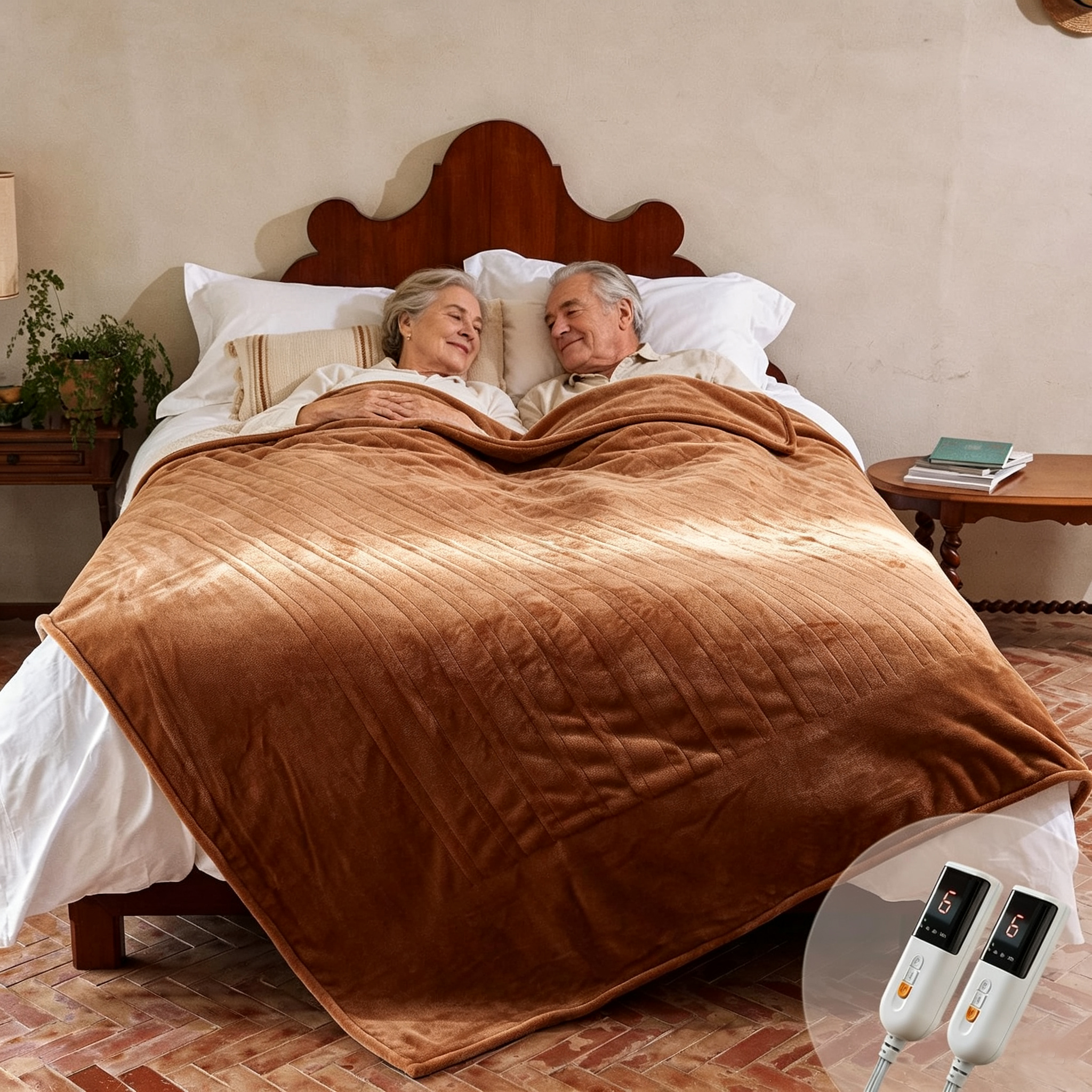
I got the dual-control queen size, because I knew my parents have different temperature preferences. My dad likes it warm; my mom always says she's too hot. Dual control means they can each set their own side, and nobody has to compromise. (If you've ever shared a bed with someone who runs hot while you run cold, you know what a big deal this is.)
It arrived, and the call I got
The day it was delivered, my mom called me on the phone. Her first line: "Honey, you shouldn't have spent the money. We're fine."
I expected it. "Just try it for a week," I said. "If you don't like it, you can send it back. But the return window closes in thirty days, so you have to actually try it."
She sighed. "Well, I guess we can try it."
About a week later, I called home. My dad answered. My mom was in the bedroom, he told me, "trying out that new blanket you sent." Then he lowered his voice, like he was sharing a secret. "She's been using it every night. Don't tell her I told you."
I smiled to myself on the other end of the line. Of course she had been.
A few days after that, my mom sent me a text. She doesn't text often, so when she does, it's always short and to the point. This one said: "Your father says he's been sleeping better. His feet don't get cold anymore. The blanket is working out fine."
That's my mom. "The blanket is working out fine" is about as close to "I love it" as she gets.
What I made sure of, on the safety side
Here's the thing about buying an electric blanket for your parents: safety is the thing you worry about the most. What if they forget to turn it off? What if something goes wrong?
I was careful about this. A few things I specifically looked for:
First, the auto-shutoff timer. The one I bought will turn itself off after eight hours, max. Even if they forget to turn it off — and let's be real, with two people in their seventies, that's a real possibility — it won't stay on all day. I told them to set it for two hours at night, before they go to sleep. That's all you need.
Second, overheat protection. The blanket has sensors that monitor temperature all across the surface, and if any spot gets too hot, it cuts power automatically. Again, this is a standard feature on decent blankets, but I wanted to make sure it was there.
Third, I made them a little instruction sheet. No, really — I typed up a single page with three steps: 1) Press the Power button. 2) Press the Heat button to level 2 or 3. 3) Press the timer button until it shows 2 hours. I taped it to the side of their nightstand. My mom said it was "very thorough," which I think means she thought it was a little over the top but appreciated it anyway.
Long-distance care
There are so many things you can't do when your parents live across the country. You can't drop by with soup when they're sick. You can't help them carry in the groceries. You can't fix the thing that's broken in the kitchen, or hang the picture they've been meaning to hang for six months.
You call. You text. You send things — little things, mostly, the kind of things that say I'm thinking about you even when I'm far away. Most of them are small. A jar of jam from the farmers' market near your apartment. A book you think they'd like. A photo you printed and mailed because you know they still like physical photos.
Some gifts don't feel like much when you buy them. It's only later, when you imagine them being used on a cold night, that you realize how much warmth was in the box.
The electric blanket was one of those things. It's not an expensive gift. It's not dramatic. It doesn't look like much when you open the box. But every night when they get into a warm bed, I know they're thinking about it, even if they don't say so.
I'm going home for Christmas this year. I'm planning to bring them a heated throw for the couch, too — the kind you can wrap around your shoulders while you watch TV.
Somehow, it never feels like enough. But it's something.
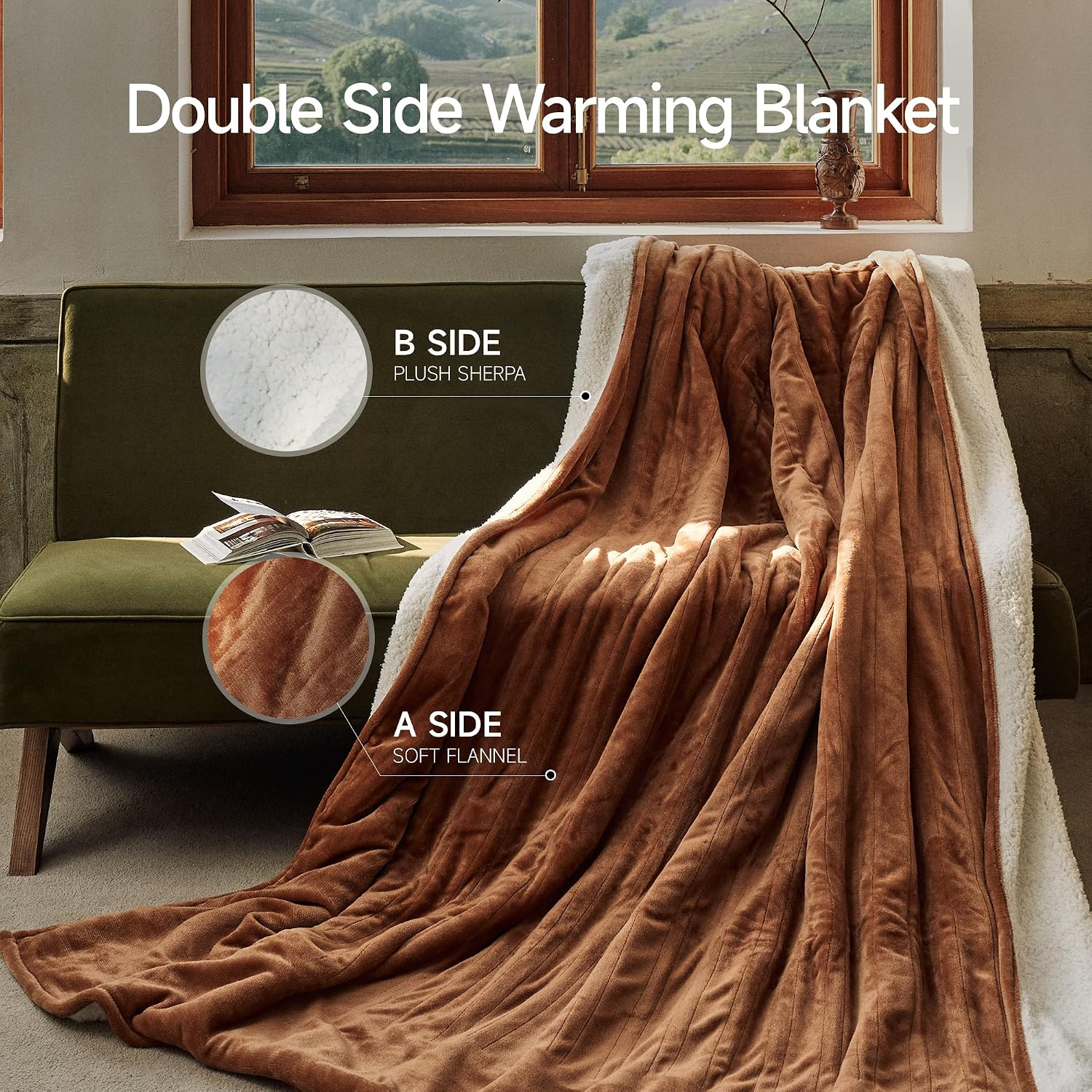
Those warm wishes I wanted to personally deliver, no matter how far away from home
Safety and simplicity always trump fancy . Prioritize large-sized models with dual independent temperature control to address the temperature differences between two individuals; along with 8-hour forced power-off protection and an easy-to-use sticker, this is the most practical way to convey care over a distance.
Learn More