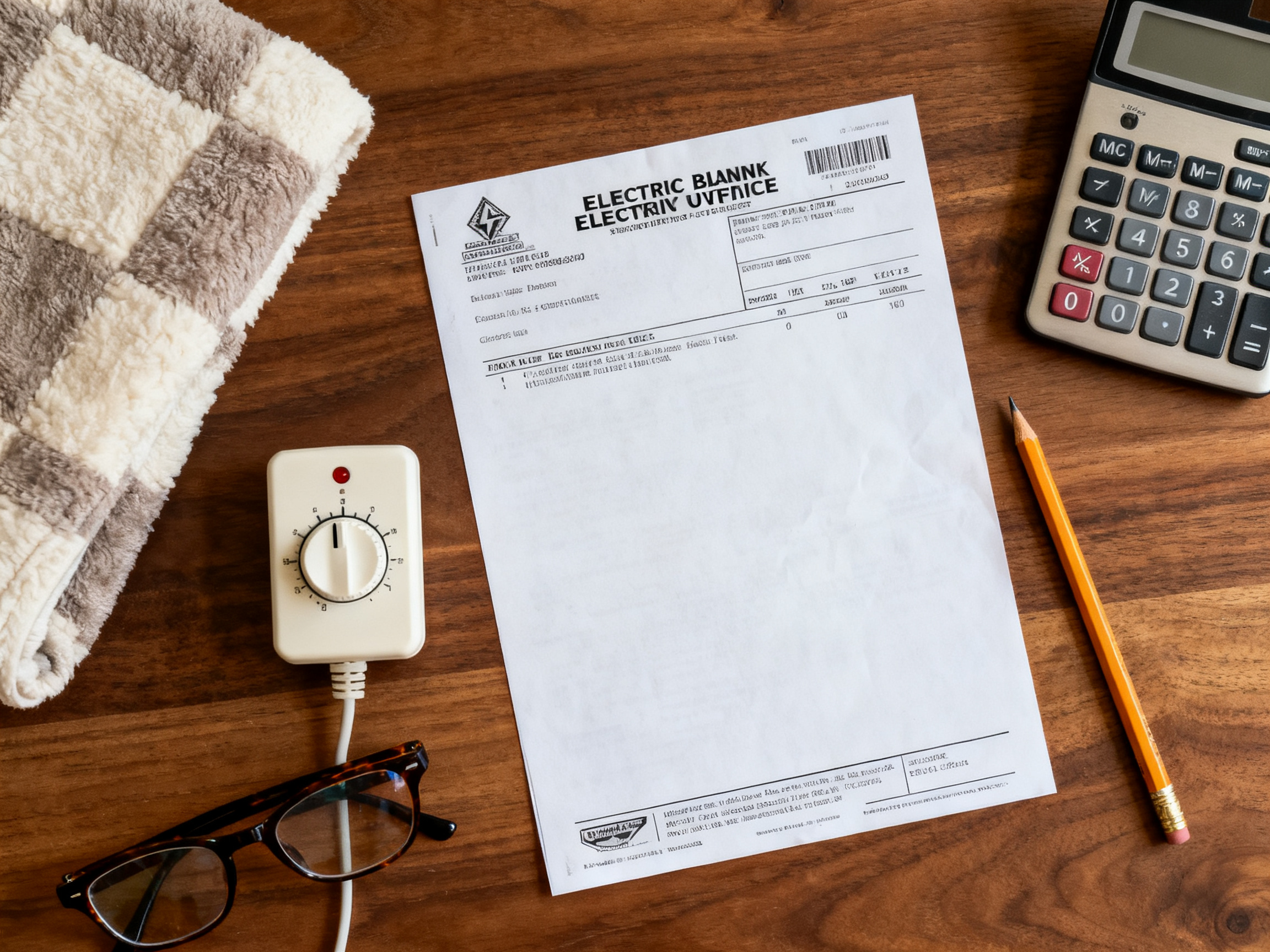
I started this experiment because of one January electricity bill.
I live in a 650-square-foot apartment in the Pacific Northwest. Winters here are cold and damp — not Minnesota cold, but the kind of cold that gets into everything and doesn't leave. I'd been running the heat more than usual and, when the bill came, I stared at the number for a full ten seconds.
It wasn't that I couldn't pay it. It was that it felt wasteful. I'm only home in the evenings and on weekends, and even then I'm usually in one room. Why was I paying to heat the entire apartment?
I decided to do a slightly nerdy little experiment. Three heating methods — central heat, a space heater, and an electric blanket — each for ten days. I'd track approximate energy use and how I actually felt. Not exactly lab conditions, but real-life conditions, which I think is more useful anyway.
Round one: central heat
For the first ten days, I heated my apartment the way most people do — with the central furnace. I kept the thermostat at 68°F (20°C) during the day when I was home, and turned it down to 62°F (17°C) at night and when I was at work.
The upside is obvious: the whole place is warm. You can walk around in a sweater and be comfortable. You don't think about which room you're in. The kitchen is warm. The bathroom is warm. Everything is the same temperature.
The downside, for me at least, is that it feels expensive and imprecise. I'm paying to heat rooms I'm not in. And there's something about forced air that I've never liked — it dries out the air, it makes noise, and it always seems to blow directly on my face, which makes my eyes dry and my skin feel tight.
After ten days, I calculated the heating portion of my electric/gas use. It worked out to roughly $1.80 to $2.20 a day, depending on how cold it was outside. Not outrageous, but it adds up.
Round two: the space heater
Next up was a 1500-watt ceramic space heater, the kind you see in every drugstore come October. I kept the thermostat turned down to 60°F and used the heater only in the room I was in — mostly my home office during the day and the living room in the evening.
Space heaters have an immediate gratification factor that central heat can't match. You plug it in, you turn it on, and within thirty seconds warm air is blowing at you. It feels efficient, like you're only heating what you need.
But the reality is a little more complicated. A 1500-watt heater on full blast uses a lot of electricity — about 1.5 kWh per hour, which at roughly 14 cents per kWh adds up to about 21 cents an hour. Even with the internal thermostat cycling off periodically once the room warmed up, leaving it on throughout an eight-hour workday still adds up.
And it's really one room, at best. Step outside the heater's line of sight and you're cold again. The bathroom stays cold. The kitchen stays cold. You end up carrying the heater around with you like a portable campfire.
Also, it dries everything out. My skin hated it. My plants hated it.
Ten-day average: around $1.40 a day. Cheaper than central heat, but only if you're disciplined about turning it off and only using it in one room.
Round three: the electric blanket
Here's the part that surprised me the most.
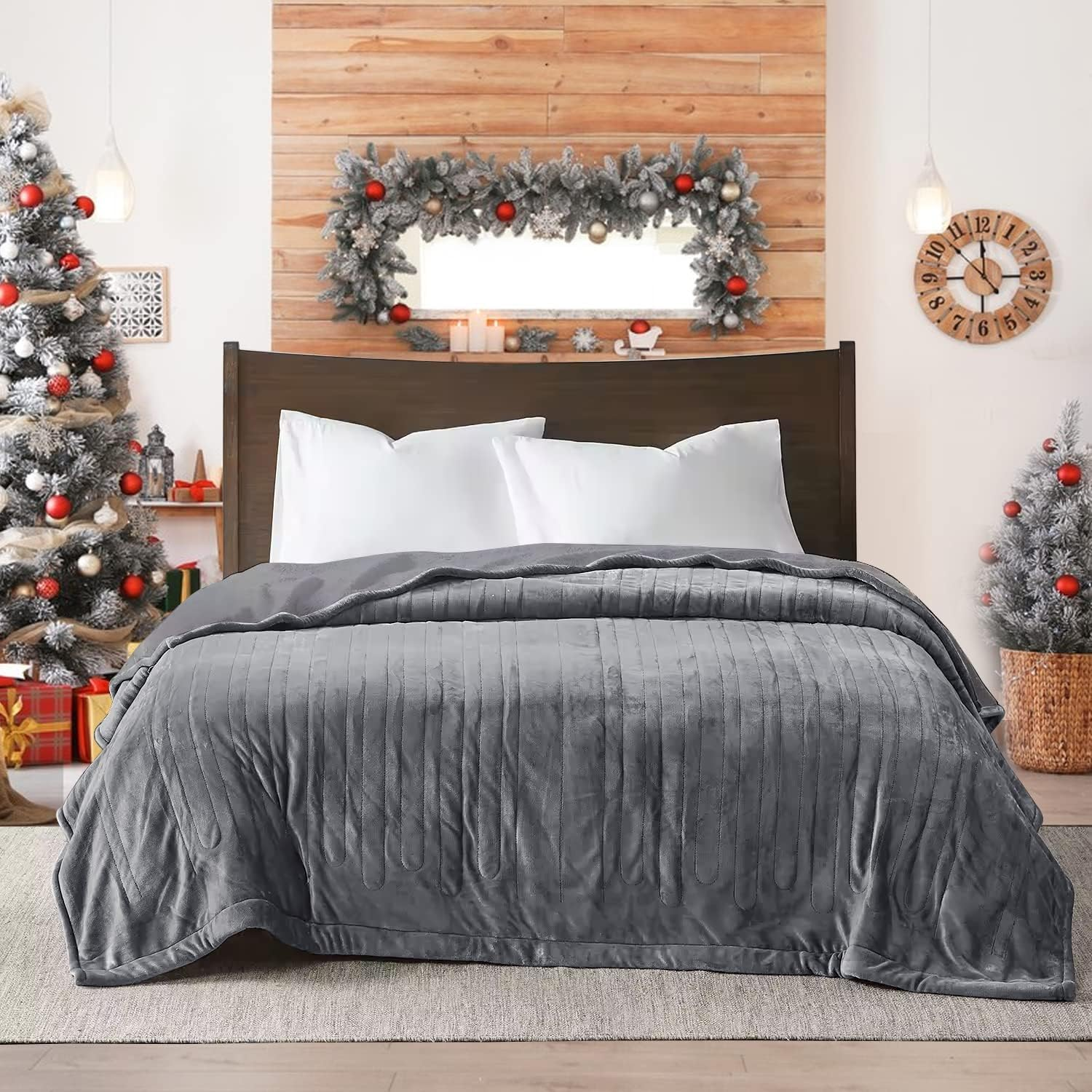
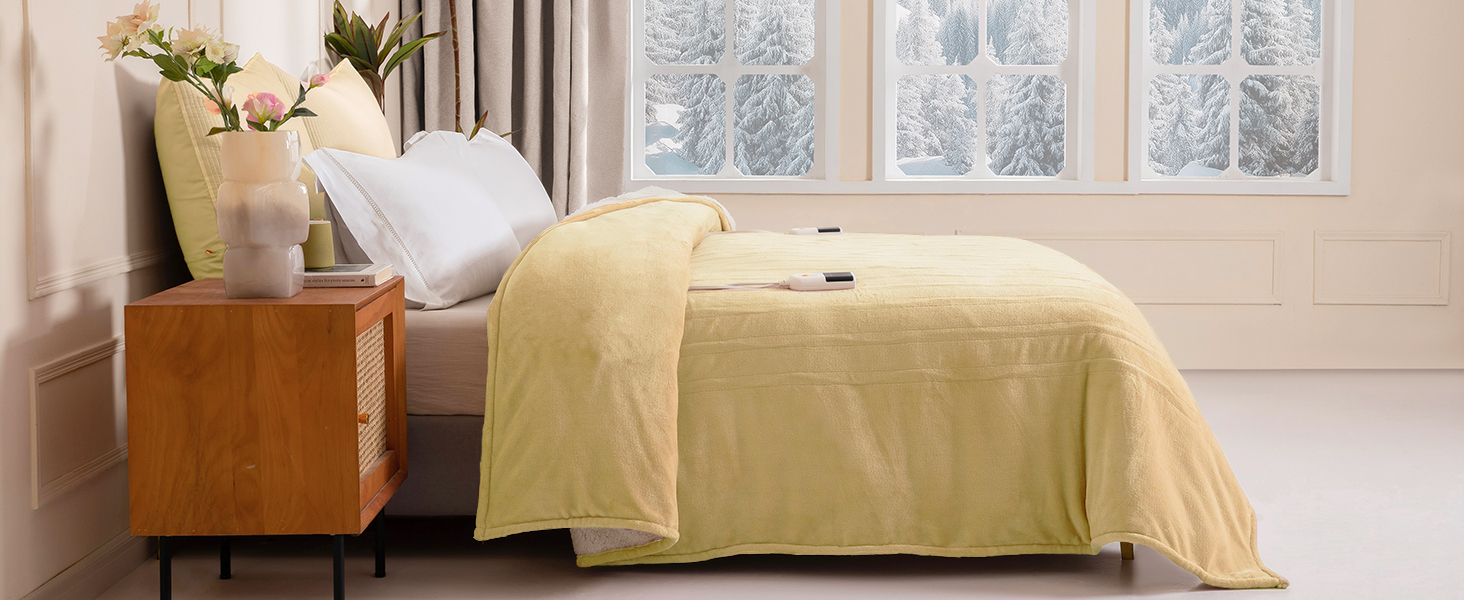
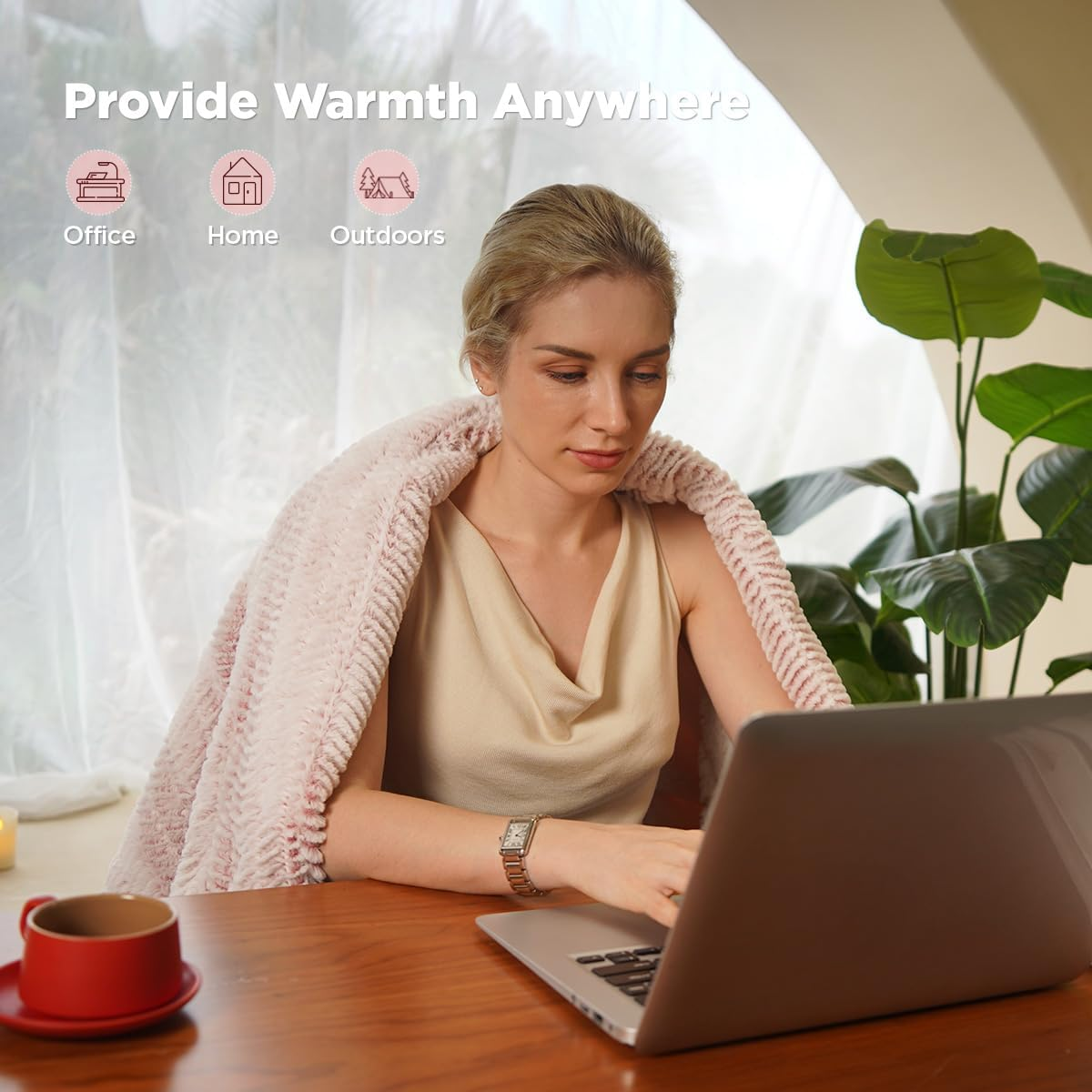
For the third ten-day period, I used two electric blankets: a wearable one while working at my desk, and a bed-sized one at night. I kept the thermostat at 60°F the whole time. Aside from a few chilly dashes to the kitchen or bathroom, I spent nearly all my static time wrapped in heat.
I assumed it would be cheaper than the other two, obviously. But I wasn't prepared for how much cheaper.
A typical electric blanket uses about 60 to 100 watts — not 1500. On a medium setting, it's closer to 50 or 60 watts. At that rate, running one for eight hours uses less than half a kilowatt-hour. That's roughly seven cents a day, if you're counting.
Both blankets combined — the wearable one during the day and the bed one at night — added up to about 15 cents a day. Fifteen cents. Versus a dollar forty for the space heater, or two dollars for central heat.
Now, obviously, it's not a direct comparison. An electric blanket doesn't heat your whole room. It doesn't make your bathroom warm in the morning. It only heats you. But here's the thing I kept thinking about: what do you actually need to be warm? Do you need the room to be warm, or do you need you to be warm?
What I actually use now
If you're expecting a clear winner — the one method that's best in every situation — I'm sorry to disappoint.
The honest answer is I use a combination. On really cold mornings, I turn the central heat up for twenty minutes while I'm making coffee, just to take the edge off the apartment. During the day while I'm working, I use the wearable electric blanket. At night, the bed one on a two-hour timer. On weekends when I'm moving around the house more, I'll use the space heater in whatever room I'm in.
The cheapest way to stay warm isn't the one that costs the least per hour. It's the one that gives you exactly the warmth you need, exactly when you need it.
Compared to the previous winter — when I just ran the heat constantly and hoped for the best — I'd estimate I'm spending about 40% less on heating. Not a life-changing amount, but enough that I notice it at the end of the month.
And the best part? I'm actually more comfortable than I was before. Not because it's hotter — it's not — but because the warmth is where I am, when I'm there.
Winter's long enough as it is. Might as well spend it warm, and be smart about it.
Stop spending money heating empty rooms
The most cost-effective way to heat your home isn't the one that costs the least per hour, but rather the one that provides the precise warmth you need at the right time and place." This document documents a 30-day heating test—from a glaring electricity bill to a strategy that reduced electricity costs by 40%. Shared with anyone who doesn't want to spend money heating an empty room.
Learn More