I'm the kind of person who researches everything before buying it. Especially something that generates heat and sits in your bed all night.
When I decided to buy an electric blanket last year, I spent about a week going down the rabbit hole. I read product pages, consumer reports, Reddit threads, and more customer reviews than I care to admit. I even texted a friend who works in home appliance testing to get his take.
The notes I took were longer than I expected. I'm sharing them here, in case it saves you some of the time I spent.
First thing: look for safety certification
This is non-negotiable. An electric blanket is a heating appliance you sleep next to. Safety should always be your first check.
In the US, look for the UL mark (Underwriters Laboratories). In Canada, it's the CSA mark. In the EU, look for CE. These are independent testing marks — they mean the product has been tested against a set of safety standards. No certification mark, no purchase. It's that simple.
My friend in appliance testing put it this way: "With electric blankets, the expensive ones aren't always better. But the really cheap ones are always worse." The heating elements, the temperature sensors, the wiring — these things cost money to make properly. If the price seems too good to be true, it's probably because they skipped something important.
Second: auto shut-off and overheat protection are two different things
They sound similar, but they do different jobs. Both matter.
Overheat protection is a safety feature. If the blanket's temperature rises above a safe threshold — say, because it got folded over on itself, or because a sensor failed — it automatically cuts power. Most decent electric blankets have this now, but I'd still double-check the product description. The cheapest ones sometimes don't.
Auto shut-off (the timer function) is different. It means the blanket turns itself off after a set amount of time — usually 2, 4, 8, or 12 hours. This isn't really an emergency safety feature; it's more of a peace-of-mind feature. You set it when you get into bed, and it turns itself off while you sleep.
Personally, I think the timer is one of the most important features. Not because I'm worried about something going wrong, but because I don't like sleeping with heat on all night. I find it dries out my skin and leaves me feeling groggy in the morning. Two hours is enough for me — it gets me warm and keeps me warm long enough to fall asleep, and then the residual heat carries me through the rest of the night. By morning, the bed is just a normal temperature, which is how I like it.
Third: how many heat settings do you actually need?
This is where product pages start to get silly. I've seen electric blankets with 10, 15, even 20 different heat settings. More is better, right?
Not really. Can you actually tell the difference between setting 7 and setting 8? Probably not. Most of us use two, maybe three settings in real life: low, medium, and a pre-heat setting that's a little warmer.
That said, two settings is too few. Low is never quite warm enough, high is always too hot. Four to six settings is the sweet spot — enough range that you can dial in exactly what you want, not so many that you're scrolling through them trying to find "the one."
One small detail that matters more than you'd think: does the controller light up at night? Some have bright LED displays that glow like a tiny nightlight. If you're sensitive to light when you sleep, look for one with a dimmer, or a controller you can turn face-down. I ended up keeping it on my nightstand and flipping it face-down on the first night so the light wouldn't catch my eye.
Fourth: fabric and washability
You're going to be sleeping against this thing — or at least under a sheet that's against it. It's going to get dusty. It's going to absorb sweat. At some point, it's going to need to be washed.
Almost all modern electric blankets have a detachable controller — you unplug it, and the blanket itself can go in the wash. Some are hand-wash only, others are machine-washable on a gentle cycle. Read the care instructions before you buy. A blanket that can't be washed is a blanket that's going to feel gross by March, no matter how good it is in November.
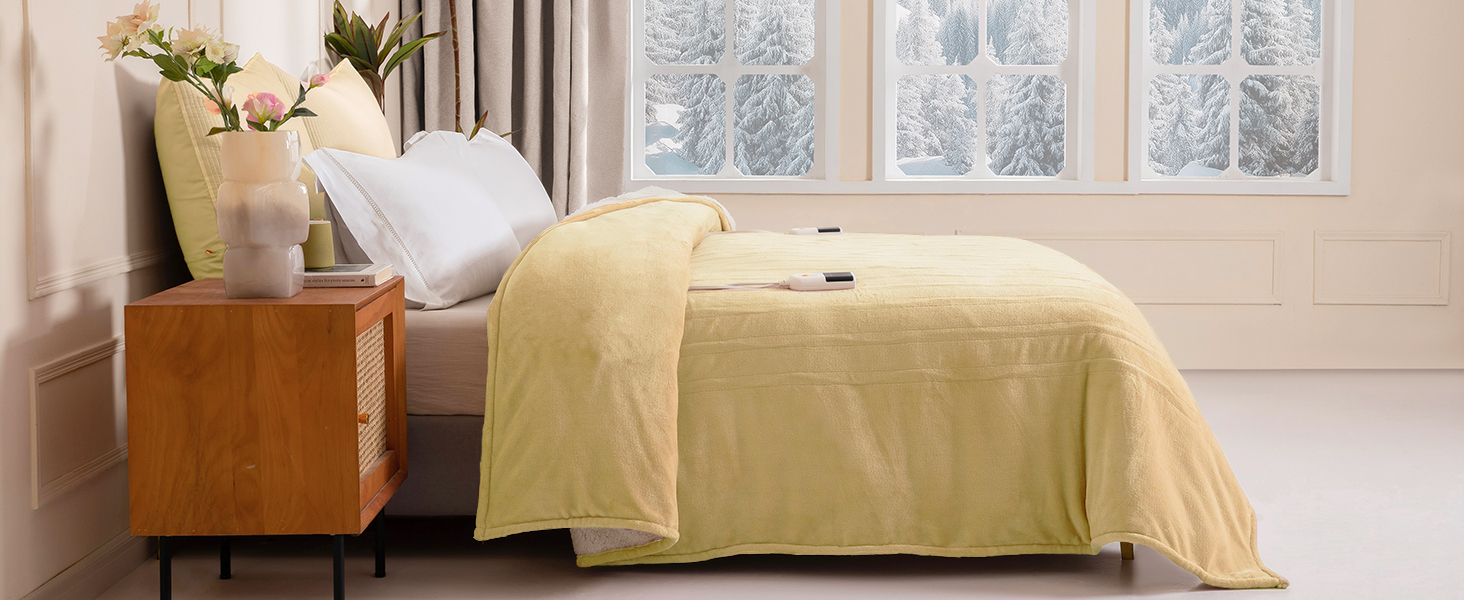
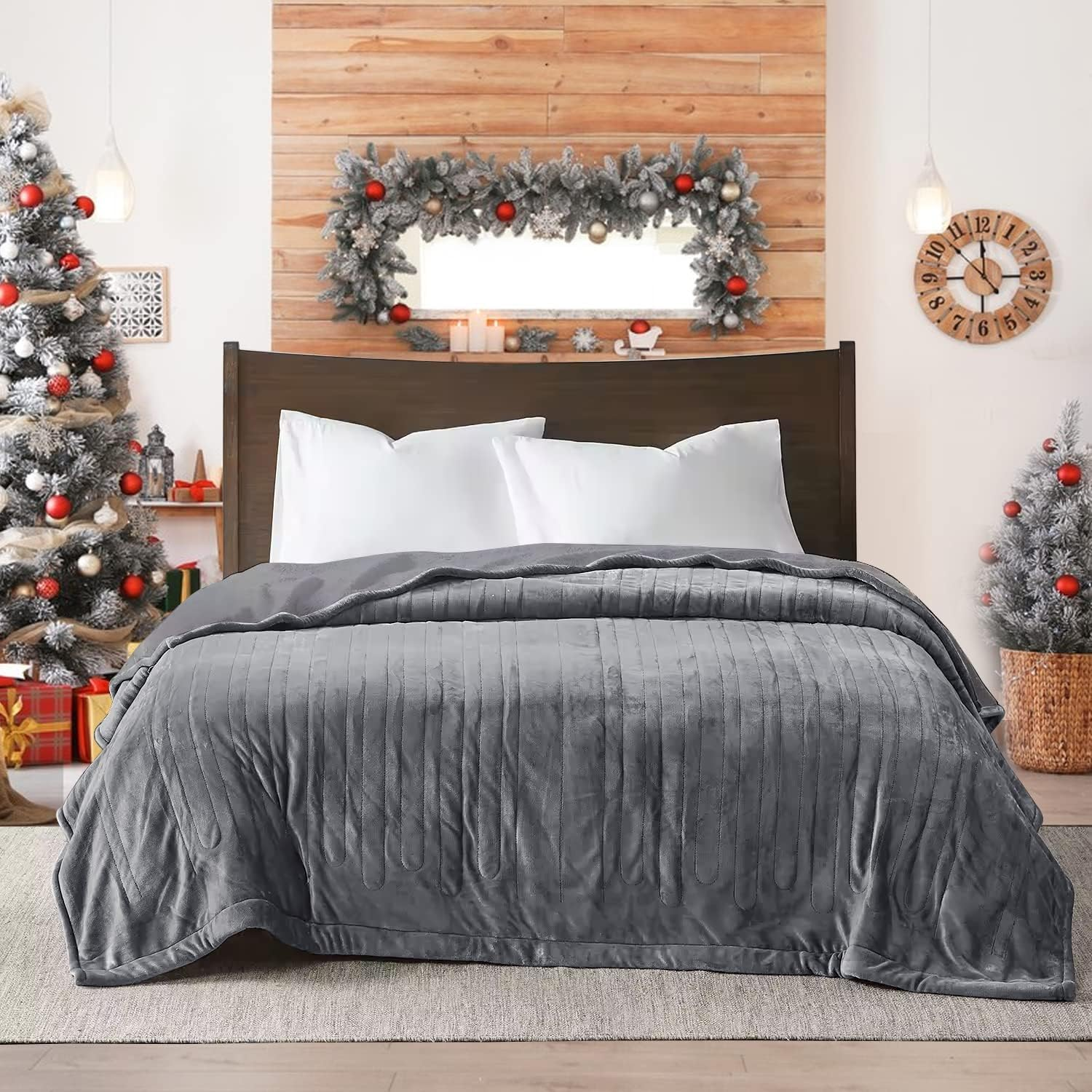
As for fabric, the main options you'll find are microplush and flannel (both usually made of soft polyester). Microplush is super soft and velvety, while fleece or flannel feels a bit more like a classic dense blanket. If you're prone to static in dry winter air, look for ones with anti-static treatments or smooth finish linings.
I went with a smooth flannel-finish polyester blanket myself — I have dry skin in the winter, and super-fuzzy long-pile microplush tends to trap static and feel itchy to me. Purely a personal preference, but worth thinking about.
Fifth: get the right size
This seems obvious, but it's easy to get wrong.
As a general rule, get one that matches your bed size or grab a throw size if it's just for couch lounging. The key safety rule here: don't bunch, fold, or tightly tuck the blanket in, because crimping the internal wires can create dangerous hot spots. Let it lay naturally over you.
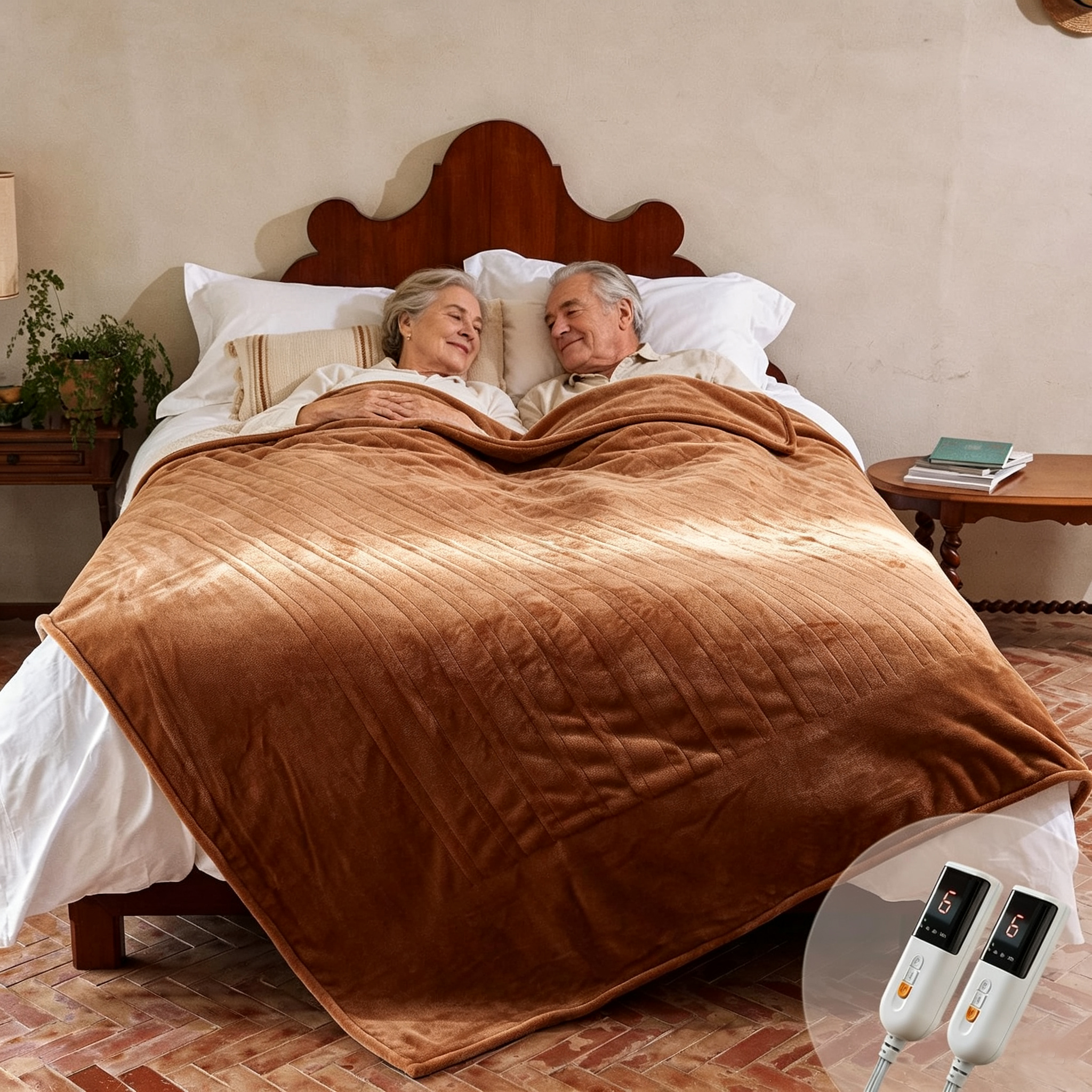
If you're buying for a shared bed and you and your partner have different temperature preferences — and let's be honest, who doesn't — look for a dual-control model. Each side has its own controller, so one person can be on low while the other is on medium. A friend of mine swears by hers. "Best $30 extra we ever spent on a bed thing," she told me. Hard to argue with that.
The goal of all this research isn't to find the "best" electric blanket. It's to find the right one for you — the one that fits how you actually sleep, not how a marketing page thinks you should sleep.
That's what I learned from a week of reading product pages. It's not a thrilling topic, but it's a useful one. A good electric blanket isn't flashy. It just works, quietly, every night, and you forget about it until winter comes back around.
Which, let's be honest, is exactly what you want.
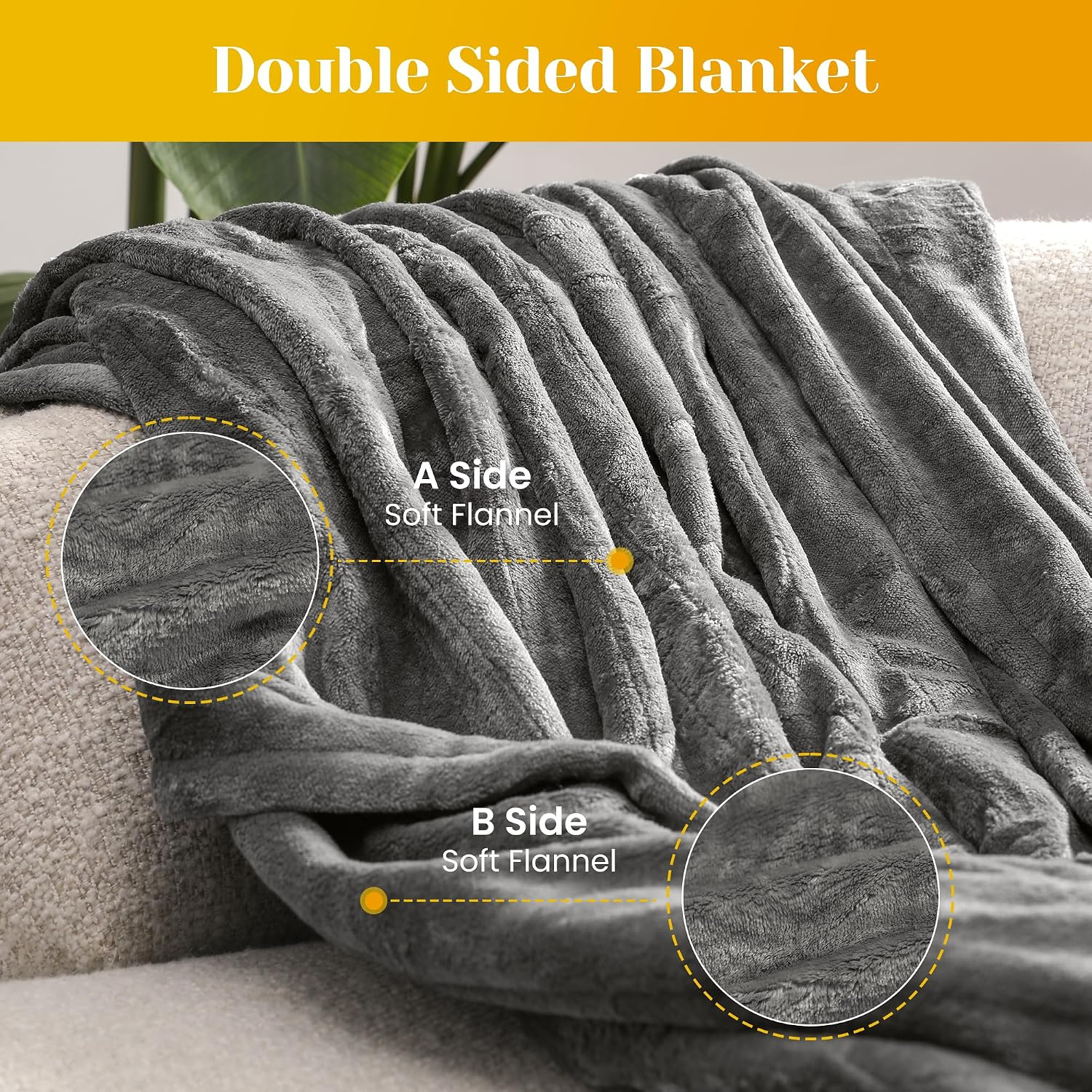
Non-prickly, static-free: A winter essential that combines safety and comfort
After all that research, this blanket was a game-changer for my winter nights. The extra-long cord comfortably reaches my nightstand, and the soft flannel gives me cozy warmth without any annoying static. Setting the timer for two hours at level 3 is my sweet spot—it gets me warm enough to fall asleep without overheating me overnight, leaving me cozy and comfortable till morning.
Learn More